Neuropeptides Overview vs. Selank: How a Single Compound's Evidence Compares to the Broader Research Field
Selank is one specific research peptide within the much larger neuropeptide field. Here's how its evidence base compares to neuropeptide research as a whole.
Quick Answer
Neuropeptides are a broad, decades-established class of signaling molecules in the nervous system, with some members (oxytocin, endorphins) supported by extensive human clinical research. Selank is one specific synthetic neuropeptide analog within that class, and its evidence base is considerably narrower — concentrated in animal studies and a limited set of Russian clinical publications, without an equivalent large-scale international trial program. Comparing the two is not a "which is better" question; it's a way of calibrating how much of the general credibility of neuropeptide research as a field should transfer to any one specific compound within it.
Key Differences
| Neuropeptides (as a class) | Selank (specific compound) | |
|---|---|---|
| Scope | Hundreds of catalogued signaling peptides across multiple families | One synthetic heptapeptide analog of tuftsin |
| Evidence maturity | Ranges from foundational (decades of study) to emerging | Concentrated research since a single lab's work, mostly since the 1990s–2000s |
| Geographic spread of research | Global, multi-institutional | Predominantly Russian institutions |
| Regulatory status | N/A (a biological signaling category, not a product) | Approved as a pharmaceutical in Russia/Ukraine; not FDA-evaluated |
| Human RCT depth | Strong for some family members (e.g., oxytocin) | Limited; few large, independently replicated RCTs |
Mechanisms: Class-Level Principles vs. Compound-Specific Proposals
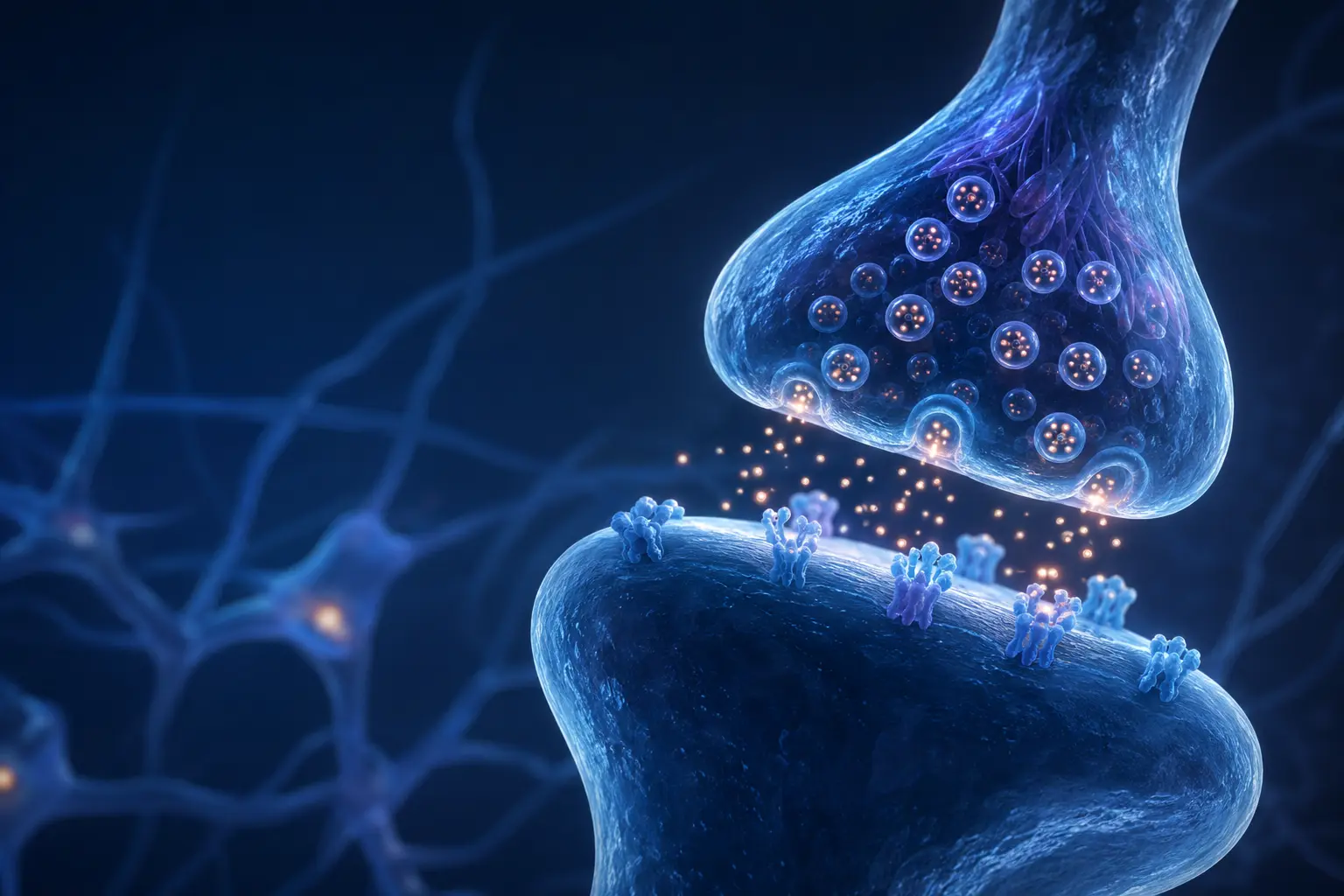
The neuropeptide overview describes general signaling principles that apply across the class: synthesis in the neuronal cell body, calcium-dependent release under high-frequency firing, and signaling primarily through G protein-coupled receptors with slower, more prolonged effects than classical neurotransmission. [] These are well-established structural and physiological features of neuropeptide biology broadly.
Selank's proposed mechanisms are compound-specific hypotheses layered on top of that general framework: modulation of GABA-A receptor function, effects on BDNF expression, and possible inhibition of enkephalin-degrading enzymes. [] These mechanisms are biologically plausible extensions of known neuropeptide signaling principles, but — unlike the general class-level mechanisms — they are not yet definitively established and are not universally replicated findings.
Evidence Level Comparison
This is where the class-vs-compound distinction matters most for researchers. The neuropeptide field overall includes some of the most clinically validated peptide biology in existence — decades of oxytocin and endorphin research, for example, rest on a very large body of independently replicated human and animal work. [] Selank's evidence, by contrast, comes primarily from a smaller number of studies conducted by a limited set of Russian research institutions, with less independent international replication. [][] Neither observation invalidates Selank as a legitimate research subject, but it does mean the strength of evidence for "neuropeptides" as a scientific concept should not be assumed to extend to Selank specifically.
Human Trial and Clinical Evidence
Several neuropeptide family members have extensive human trial histories, including intranasal oxytocin studies in social cognition research. Selank's human clinical data comes mostly from Russian trials examining anxiety and asthenic disorders, some of which report positive outcomes on anxiety rating scales but have limitations including small sample sizes and incompletely described blinding procedures. [] No large, independently funded international randomized controlled trial of Selank has been published to date.
Safety Findings
Class-wide, neuropeptide signaling is a normal and essential part of nervous system physiology, and the general safety profile of endogenous neuropeptide signaling is not in question. Selank-specific safety data is more limited: available data is drawn primarily from the same Russian clinical research base described above, rather than from an independent, large-scale safety surveillance program of the kind more established neuropeptide-based drugs have undergone.
Regulatory Status
Neuropeptides as a class have no regulatory status — they are an endogenous biological signaling category, not a regulated product. Selank, as a specific synthetic compound, does have a regulatory history: it is approved as a pharmaceutical drug in Russia and Ukraine for anxiety disorders and as a nootropic agent, but this approval pathway differs substantially from FDA or EMA standards and Selank has not been evaluated or approved by FDA. See Introduction to Peptide Compounding & FDA Regulation for how U.S. regulatory pathways for peptide substances generally work.
Research Limitations
The core limitation in this comparison is one of scale: a single compound's research record, however genuine, cannot be judged by borrowing the credibility of its broader field. Researchers should evaluate Selank on its own evidentiary merits — study count, replication, independence of funding, and trial design — rather than reasoning that because "neuropeptides are well-studied," any given neuropeptide analog inherits that same evidentiary weight. For a framework on making that kind of evaluation, see Evaluating Peptide Research Claims.
Frequently Asked Questions
Does the fact that neuropeptides are well-studied mean Selank is well-studied too?
No. Neuropeptides as a class include extensively studied signaling molecules, but Selank specifically has a much narrower, more geographically concentrated evidence base. Each compound within a broader class needs to be evaluated on its own evidence.
Is Selank considered a "neuropeptide" in the same sense as oxytocin or endorphins?
Yes, structurally and functionally Selank is a synthetic peptide analog studied for CNS signaling effects, placing it within the neuropeptide research category. However, its research maturity is not comparable to well-established neuropeptides like oxytocin.
Why does most Selank research come from Russia?
Selank was developed at the Institute of Molecular Genetics of the Russian Academy of Sciences, and subsequent research and clinical approval have been concentrated among Russian and Ukrainian institutions, with limited independent replication by international research groups to date.
References
- 1.Hökfelt T, Broberger C, Xu ZQ, Sergeyev V, Ubink R, Diez M. “Neuropeptides — an overview.” Neuropharmacology. 2000;39(8):1337-1356. doi:10.1016/s0028-3908(00)00010-1 [PubMed]
- 2.Semenova TP, Kozlovskaya MM, Zakharova NM, Kozlovskii II. “Correction of exploratory behavior and memory in rats with the peptide anxiolytic selank.” Bulletin of Experimental Biology and Medicine. 2010;150(3):374-376 [PubMed]
- 3.Uchakina ON, Uchakin PN, Miasoedov NF, Andreeva LA, Shcherbenko VE, Mezentseva MV, Gabaeva MV, Sokolov OIu, Zozulia AA, Ershov FI. “Immunomodulatory effects of selank in patients with anxiety-asthenic disorders.” Zhurnal Nevrologii i Psikhiatrii Imeni S.S. Korsakova. 2008;108(5):71-75 [PubMed]