MOTS-c Research: Obesity, Osteoporosis, Metabolism, and FDA Status
Review MOTS-c research on obesity, insulin sensitivity, osteoporosis, bone remodeling, human evidence, safety, and its current FDA status.
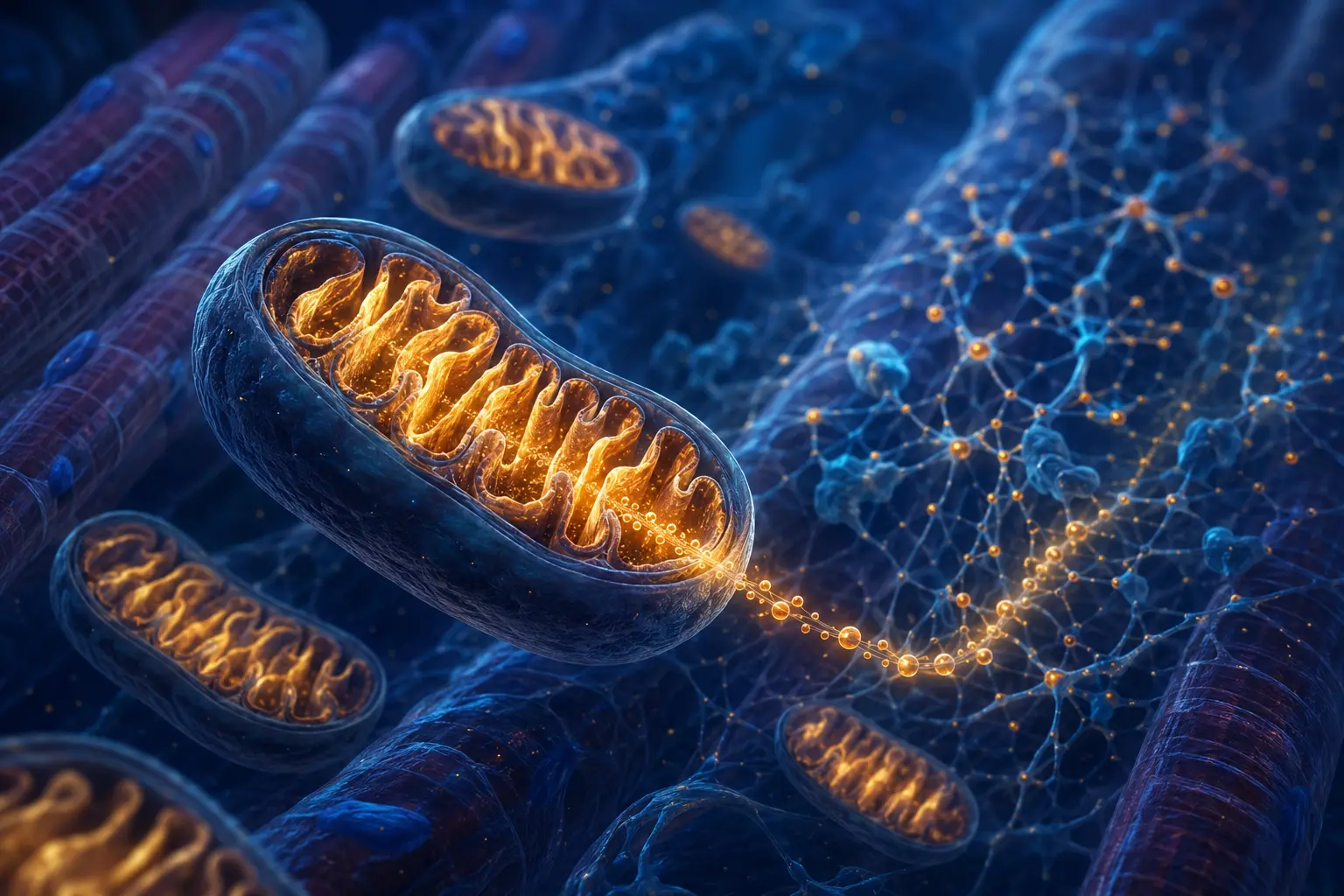
MOTS-c is a 16-amino-acid mitochondria-derived peptide encoded within a short open reading frame of mitochondrial 12S ribosomal RNA. It was reported in 2015 as part of a growing class of mitochondrial-derived peptides that may carry stress and metabolic signals between mitochondria and the rest of the cell. [2]
Most evidence for administered synthetic MOTS-c comes from cells and animals. FDA's 2026 review reported that it did not identify clinical studies or human exposure data involving administered MOTS-c. [1] A newly registered clinical study may begin to address that gap, but it has no posted results as of this article's publication. [5]
In This Article
- What MOTS-c is
- Proposed mechanisms
- Animal and cell research
- Obesity and metabolic research
- Osteoporosis and bone research
- Human research
- Safety and side effects
- FDA and compounding status
- Frequently asked questions
What Is MOTS-c?
MOTS-c stands for mitochondrial open reading frame of the 12S rRNA type-c. Unlike peptides encoded by conventional nuclear genes, its sequence is derived from mitochondrial genetic material. The peptide has been detected endogenously in human and rodent circulation, although measuring small peptides reliably presents analytical challenges.
The naturally occurring peptide and a synthetic bulk drug substance are related but not interchangeable concepts. Studies that measure circulating MOTS-c do not automatically establish what happens when a manufactured form is administered. Identity, impurities, aggregation, formulation, and route are additional variables.
FDA separately evaluated MOTS-c free base and MOTS-c acetate for the July 2026 PCAC meeting. [1]
Proposed Mechanisms
AMPK and metabolic stress signaling
The original research connected MOTS-c with metabolic homeostasis and AMP-activated protein kinase (AMPK), a central sensor of cellular energy status. In cells and mice, investigators reported changes involving folate-cycle and purine metabolism, skeletal-muscle glucose handling, and insulin sensitivity. [2]
AMPK activation is not unique to MOTS-c, and pathway activation alone does not establish a clinical effect. It identifies a plausible biological route that must be connected to exposure, target engagement, dose-response, and meaningful outcomes.
Nuclear translocation and gene expression
Subsequent research has examined whether MOTS-c can move to the nucleus during metabolic stress and influence nuclear gene expression. This is an example of proposed mitochondrial-to-nuclear communication. The molecular targets and full receptor biology remain incompletely defined.
Exercise and muscle homeostasis
Animal and human observational work has explored relationships among exercise, circulating MOTS-c, age, and muscle metabolism. A 2021 study reported exercise-associated changes and administered the peptide to mice, with findings related to physical performance and age-dependent decline. [4] Observing a peptide change after exercise does not show that injecting synthetic peptide reproduces exercise or its health effects.
Animal and Cell Research
The best-known 2015 study reported that synthetic MOTS-c altered metabolic outcomes in mouse models, including diet-related obesity and insulin resistance. [2] Other animal and cell studies have examined:
- Glucose uptake and skeletal-muscle metabolism
- Plasma metabolites and insulin sensitivity [3]
- Adipose thermogenesis
- Bone-cell differentiation and osteolysis models
- Vascular calcification
- Age-associated physical decline [4]
FDA noted that these studies used in vitro and rodent models, often did not clearly distinguish free-base from salt forms, and did not establish clinical relevance. The agency also identified incomplete dose-response information and uncertainty about molecular targets. [1]
Obesity and Metabolic Research
The principal obesity-related evidence comes from a 2015 experiment in adult male mice fed a diet in which 60% of calories came from fat. Mice given daily intraperitoneal MOTS-c for eight weeks gained less weight than untreated high-fat-diet controls. At the end of treatment, the treated mice weighed about 20% less than the vehicle group and showed higher energy expenditure, less liver-fat accumulation, and less diet-induced hyperinsulinemia. [2]
Those findings support a metabolic research hypothesis, not a demonstrated weight-loss treatment. The study was conducted in one mouse model, used intraperitoneal administration, and did not provide human efficacy, durability, or safety data. FDA also highlighted missing dose-response assessment and uncertainty about MOTS-c's molecular targets. [1]
MOTS-c has additionally been studied in animal and cell models of glucose handling and insulin sensitivity. Human studies that measure naturally occurring MOTS-c levels are observational and do not show that administering synthetic MOTS-c produces weight loss. No completed clinical trial has established effects on body weight, body composition, or obesity-related outcomes.
Osteoporosis and Bone Research
The bone evidence consists of two distinct preclinical lines of research.
First, a 2018 study exposed cultured rat bone-marrow mesenchymal stem cells to MOTS-c during osteogenic differentiation. The researchers reported increased expression of osteogenesis-associated markers—including ALP, RUNX2, and osteocalcin—and more calcified nodules. Knocking down TGF-beta1 reduced the observed effect, supporting a proposed TGF-beta/Smad mechanism. [7] This was an in-vitro cell study; it did not measure bone mineral density, fractures, or clinical outcomes in people with osteoporosis.
Second, a 2019 study examined particle-induced osteolysis. Researchers implanted ultra-high-molecular-weight polyethylene particles in the skull region of mice and injected MOTS-c locally for seven days. They reported less local bone erosion and fewer osteoclasts, together with changes in RANKL, osteoprotegerin, and inflammatory signaling. [8] This model is useful for studying inflammatory bone loss around implant debris, but it is not equivalent to age-related or postmenopausal osteoporosis.
Together, these studies suggest possible effects on bone formation and resorption pathways. They do not establish that MOTS-c prevents fractures or treats osteoporosis. FDA found no human administration studies for this use and noted that the nomination lacked sufficient information to evaluate clinical appropriateness. [1]
Human Research
There are two different categories of “human evidence” that should not be confused.
Endogenous measurement studies
Researchers have measured naturally occurring MOTS-c or MOTS-c-associated genetic variation in human samples and examined relationships with age, exercise, or metabolic traits. These studies can support biological relevance, but they do not test the safety or effectiveness of an administered product.
Interventional studies
FDA reported no identified clinical studies or human exposure data for administered MOTS-c in its briefing review. [1] ClinicalTrials.gov now lists NCT07505745, a study designed to evaluate MOTS-c in adults with early metabolic dysfunction. [5] Registration shows that a study is planned or underway; it is not evidence of a positive result. The registry should be checked for recruitment status, protocol changes, completion, and posted results.
Safety and Side Effects
MOTS-c does not have a clinically established side-effect profile. FDA reported no human exposure data by any route in the evidence it reviewed and concluded that potential human safety risks are unknown. [1]
Relevant uncertainties include:
- Immune responses to an administered peptide
- Aggregation and peptide-related impurities
- Product identity and consistency
- Off-target metabolic effects
- Organ exposure and pharmacokinetics
- Long-term or repeated-use effects
The fact that an endogenous peptide circulates in the body does not establish the safety of an exogenous manufactured product. Concentration, timing, route, chemical form, and product quality can all change biological effects.
MOTS-c is also relevant to sports governance. FDA's review notes its appearance in anti-doping resources. Athletes should evaluate current rules through the applicable governing body rather than infer permissibility from research status.
FDA and Compounding Status
MOTS-c is not an FDA-approved drug. MOTS-c-related substances were nominated for six proposed uses: insulin resistance, obesity, osteoporosis, vascular calcification, muscle/fat metabolism, and longevity. FDA evaluated MOTS-c free base and MOTS-c acetate for potential placement on the 503A Bulks List, but stated that the nomination did not provide enough information to evaluate the substances for any of those proposed uses and that it found no clinical studies of administered MOTS-c. [1]
FDA staff concluded that both forms were not well characterized, historical compounding use was unclear, human effectiveness and safety data were unavailable, and the overall balance weighed against listing. FDA proposed that neither form be added. [1]
On July 23, 2026, PCAC voted 7–5, with two abstentions, to recommend inclusion of the MOTS-c-related group. That recommendation is nonbinding and does not establish safety, effectiveness, or FDA approval. FDA final action on the 503A Bulks List remains pending. [6]
The FDA PCAC peptide review hub tracks the full outcome and next regulatory steps.
Evidence Assessment
| Evidence area | Current assessment |
|---|---|
| Biological origin | Endogenous mitochondrial-derived peptide identified |
| Mechanistic evidence | Multiple metabolic pathways proposed |
| Obesity evidence | High-fat-diet mouse studies; no demonstrated human weight-loss effect |
| Bone evidence | Rat-cell osteogenesis and mouse osteolysis models; no human BMD or fracture data |
| Animal evidence | Substantial relative to human evidence |
| Human observational evidence | Endogenous levels and associations studied |
| Human administration evidence | None identified by FDA; a trial is registered |
| Long-term safety | Unknown |
| FDA approval | Not approved |
Frequently Asked Questions
Is MOTS-c naturally produced by humans?
Research indicates that MOTS-c is encoded by mitochondrial genetic material and can be detected in human tissues or circulation. That does not establish the safety or effectiveness of administering a synthetic product.
Is MOTS-c an exercise mimetic?
Some research links MOTS-c with exercise signaling and reports effects in mice. Calling it an “exercise mimetic” overstates what has been demonstrated in humans.
Does MOTS-c cause weight loss?
A high-fat-diet mouse study reported less weight gain and improved metabolic measures with administered MOTS-c. That does not establish weight-loss efficacy in people. FDA found no human administration studies evaluating MOTS-c for obesity.
Does MOTS-c treat osteoporosis?
No human study has shown that MOTS-c improves bone mineral density, prevents fractures, or treats osteoporosis. Published findings involve cultured rat bone-marrow cells and a mouse model of particle-induced osteolysis, which are preliminary and not equivalent to clinical osteoporosis evidence.
Has MOTS-c been tested in people?
FDA reported no identified human administration studies in its 2026 briefing. A clinical study is now registered, but no results were posted when this article was updated.
Is MOTS-c FDA approved?
No. The July 2026 review concerns the 503A Bulks List, not approval of MOTS-c as a drug.
How does MOTS-c compare with GLP-1 drugs?
They are different research categories. Approved GLP-1-based medicines act through defined incretin receptors and have extensive human trial programs. MOTS-c has a mitochondrial signaling hypothesis supported mainly by preclinical evidence. See GLP-1 receptor agonist research for that evidence base.
References
- 1.U.S. Food and Drug Administration. “FDA Briefing Document for MOTS-c-Related Bulk Drug Substances.” 2026. [Link]
- 2.Lee C, Zeng J, Drew BG, Sallam T, Martin-Montalvo A, Wan J, Kim SJ, Mehta H, Hevener AL, de Cabo R, Cohen P. “The mitochondrial-derived peptide MOTS-c promotes metabolic homeostasis and reduces obesity and insulin resistance.” Cell Metabolism. 2015;21(3):443-454 [PubMed]
- 3.Kim SJ, Miller B, Mehta HH, Xiao J, Wan J, Arpawong TE, Yen K, Cohen P. “The mitochondrial-derived peptide MOTS-c is a regulator of plasma metabolites and enhances insulin sensitivity.” Physiological Reports. 2019;7(13):e14171
- 4.Reynolds JC, Lai RW, Woodhead JST, Joly JH, Mitchell CJ, Cameron-Smith D, Lu R, Cohen P, Graham NA, Benayoun BA. “MOTS-c is an exercise-induced mitochondrial-encoded regulator of age-dependent physical decline and muscle homeostasis.” Nature Communications. 2021;12:470
- 5.National Library of Medicine. “MOTS-c for Improving Insulin Sensitivity and Cardiometabolic Health.” 2026. [Link]
- 6.Eglovitch JS. “FDA advisory committee backs two more peptides, rejects one for compounding list.” Regulatory Focus, Regulatory Affairs Professionals Society. 2026. [Link]
- 7.Hu BT, Chen WZ. “MOTS-c improves osteoporosis by promoting osteogenic differentiation of bone marrow mesenchymal stem cells via TGF-beta/Smad pathway.” European Review for Medical and Pharmacological Sciences. 2018;22(21):7156-7163. doi:10.26355/eurrev_201811_16247 [PubMed]
- 8.Yan Z, Zhu S, Wang H, Wang L, Du T, Ye Z, Zhai D, Zhu Z, Tian X, Lu Z. “MOTS-c inhibits osteolysis in the mouse calvaria by affecting osteocyte-osteoclast crosstalk and inhibiting inflammation.” Pharmacological Research. 2019;147:104381. doi:10.1016/j.phrs.2019.104381 [PubMed]