GLP-1 Receptor Agonists: From Peptide Biology to Clinical Research
GLP-1 biology and the research behind the class of incretin-based drugs that have transformed obesity and diabetes treatment, from discovery to clinical trials.
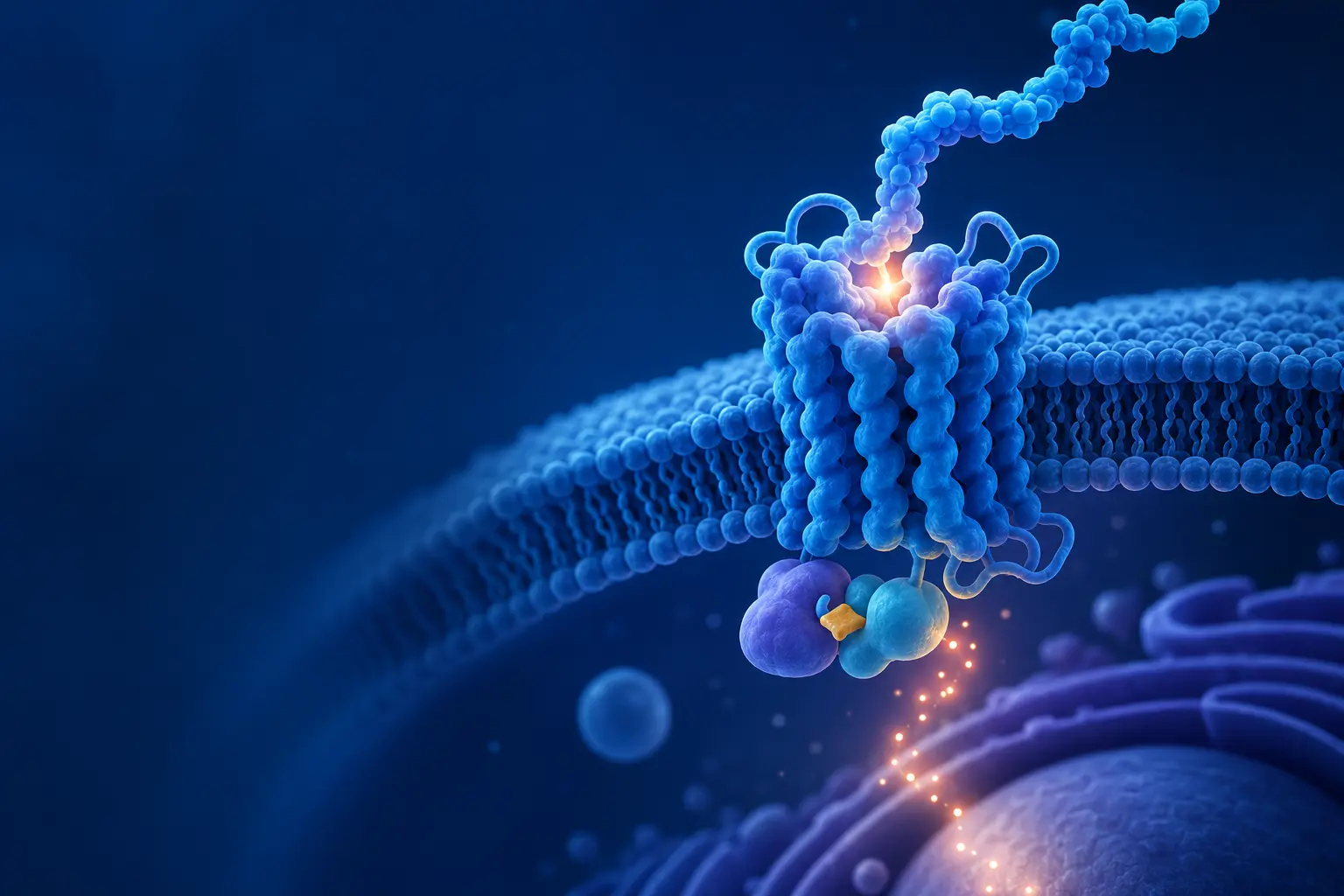
Glucagon-like peptide-1 (GLP-1) is a 30-amino-acid incretin hormone produced by L-cells in the distal small intestine and colon in response to nutrient ingestion. Its research trajectory — from the characterization of an endogenous peptide hormone to the development of several approved pharmaceutical agents — represents one of the most successful examples of translational peptide pharmacology in modern medicine.
Understanding GLP-1 biology is relevant to peptide researchers because it illustrates the complete arc from receptor characterization to mechanism elucidation to drug development, and because it demonstrates how natural peptide limitations drive structural innovation.
GLP-1 Biology: The Incretin Effect
The incretin effect describes the observation that oral glucose stimulates significantly more insulin secretion than the same dose of glucose administered intravenously. L-cells sense luminal nutrients and release GLP-1 into the portal circulation in response.
GLP-1 acts through the GLP-1 receptor (GLP-1R), a G protein-coupled receptor expressed on pancreatic beta cells, the brain, heart, kidney, and other tissues. At the pancreas, GLP-1 may potentiate glucose-stimulated insulin secretion and inhibit glucagon release — effects that are glucose-dependent, meaning they diminish as blood glucose normalizes.
This glucose-dependence is pharmacologically important: it means GLP-1R stimulation has a built-in safety mechanism against hypoglycemia that insulin injection does not share.
The Problem: Native GLP-1's Short Half-Life
Native GLP-1 has a plasma half-life of approximately 1–2 minutes due to rapid cleavage by DPP-4 at the Ala2 position. This renders the natural peptide impractical as a drug — continuous infusion would be required to maintain effective levels.
This problem was solved through two independent approaches:
DPP-4 inhibitors (gliptins): Small molecules that block DPP-4, extending native GLP-1 and GIP half-lives. Examples: sitagliptin, saxagliptin. These are orally available drugs that enhance endogenous incretin action.
GLP-1 receptor agonists (structural analogs): Synthetic peptides or peptide analogs that activate the GLP-1R but are resistant to DPP-4 degradation. Examples span a remarkable range of half-lives and structures.
The Structural Innovation Trajectory
| Compound | t½ | Key Modification | Route |
|---|---|---|---|
| Native GLP-1 | ~2 min | None (endogenous) | Not pharmaceutical |
| Exenatide | ~2.4 h | Gila monster lizard GLP-1 homolog, DPP-4 resistant | SC twice daily |
| Liraglutide | ~13 h | Fatty acid attached to Lys26 for albumin binding | SC once daily |
| Semaglutide SC | ~7 days | Enhanced fatty acid linker + Aib substitution | SC once weekly |
| Semaglutide oral | ~7 days | Same peptide + SNAC absorption enhancer | Oral once daily |
| Tirzepatide | ~5 days | GLP-1/GIP dual agonist | SC once weekly |
This table illustrates in miniature the principles of peptide drug development. For a deeper review of how half-life extension strategies work across the class, see our pharmacokinetics primer.
Weight Loss Research
GLP-1 receptors are expressed in the hypothalamus and brainstem, regions involved in appetite regulation and food intake. Animal research suggested GLP-1R agonism might reduce food intake, and this was observed in early human studies.
Clinical trials of GLP-1R agonists for obesity — particularly semaglutide at higher doses than used for diabetes — have produced weight loss of 15–20% of body weight in large randomized controlled trials. The STEP program trials represent some of the most rigorously designed clinical trials in peptide pharmacology history.
The mechanism through which GLP-1R agonists may reduce body weight involves multiple proposed pathways: reduced appetite via hypothalamic signaling, reduced caloric intake, delayed gastric emptying, and possibly effects on reward-related eating behavior. Disentangling these mechanisms remains an active research area.
Cardiovascular Research
Several GLP-1R agonists have been evaluated in large cardiovascular outcome trials. The LEADER trial (liraglutide), SUSTAIN-6 (semaglutide), and SELECT trial (semaglutide in non-diabetic cardiovascular disease patients) have reported reductions in major adverse cardiovascular events (MACE) in high-risk populations.
These are large, pre-registered RCTs — the highest level of clinical evidence — and represent the type of rigorously designed trials that establish whether a peptide-based intervention produces a clinically meaningful outcome.
What This Trajectory Teaches
The GLP-1 story is instructive for evaluating other peptide research areas:
- Even a peptide with a compelling biological target required decades of structural iteration to become a viable drug
- Animal data predicting weight loss preceded human confirmation by years
- The mechanism of action is still not fully resolved despite years of clinical use
- Rigorous clinical trials — not mechanism studies — ultimately established clinical value
Researchers approaching any peptide compound should hold this standard in mind.
The Next Generation: Dual and Triple Agonists
The incretin pharmacology story did not end with GLP-1 receptor agonists. Researchers and pharmaceutical developers have systematically extended the approach by adding activity at additional receptors:
-
Tirzepatide (Mounjaro/Zepbound) — adds GIP receptor agonism to GLP-1R activity. FDA approved 2022/2023. Phase III trials demonstrated approximately 21% mean weight loss — greater than seen with GLP-1R agonism alone.
-
Retatrutide — adds glucagon receptor agonism to GIP/GLP-1 dual agonism. In Phase III trials. Phase II data reported approximately 24% mean weight loss, the largest pharmacological weight loss effect published at the time.
For a detailed examination of the approved drug with the strongest clinical evidence base in this class, see Semaglutide: From GLP-1 Biology to Ozempic and Wegovy.
References
- 1.Drucker DJ. “The biology of incretin hormones.” Cell Metabolism. 2006;3(3):153-165. doi:10.1016/j.cmet.2006.01.004 [PubMed]
- 2.Wilding JPH, Batterham RL, Calanna S, Davies M, Van Gaal LF, Lingvay I, McGowan BM, Rosenstock J, Tran MTD, Wadden TA, Wharton S, Yokote K, Zeuthen N, Kushner RF; STEP 1 Study Group. “Once-Weekly Semaglutide in Adults with Overweight or Obesity.” New England Journal of Medicine. 2021;384(11):989-1002. doi:10.1056/NEJMoa2032183 [PubMed]
- 3.Marso SP, Bain SC, Consoli A, Eliaschewitz FG, Jodar E, Leiter LA, Lingvay I, Rosenstock J, Seufert J, Warren ML, Woo V, Hansen O, Holst AG, Pettersson J, Vilsboll T; SUSTAIN-6 Investigators. “Semaglutide and Cardiovascular Outcomes in Patients with Type 2 Diabetes.” New England Journal of Medicine. 2016;375(19):1834-1844. doi:10.1056/NEJMoa1607141 [PubMed]