Melanotan II: Research, Risks, and Regulatory Status
Research overview of Melanotan II, a synthetic melanocortin receptor agonist: mechanism, studied effects, documented safety concerns, and regulatory status.
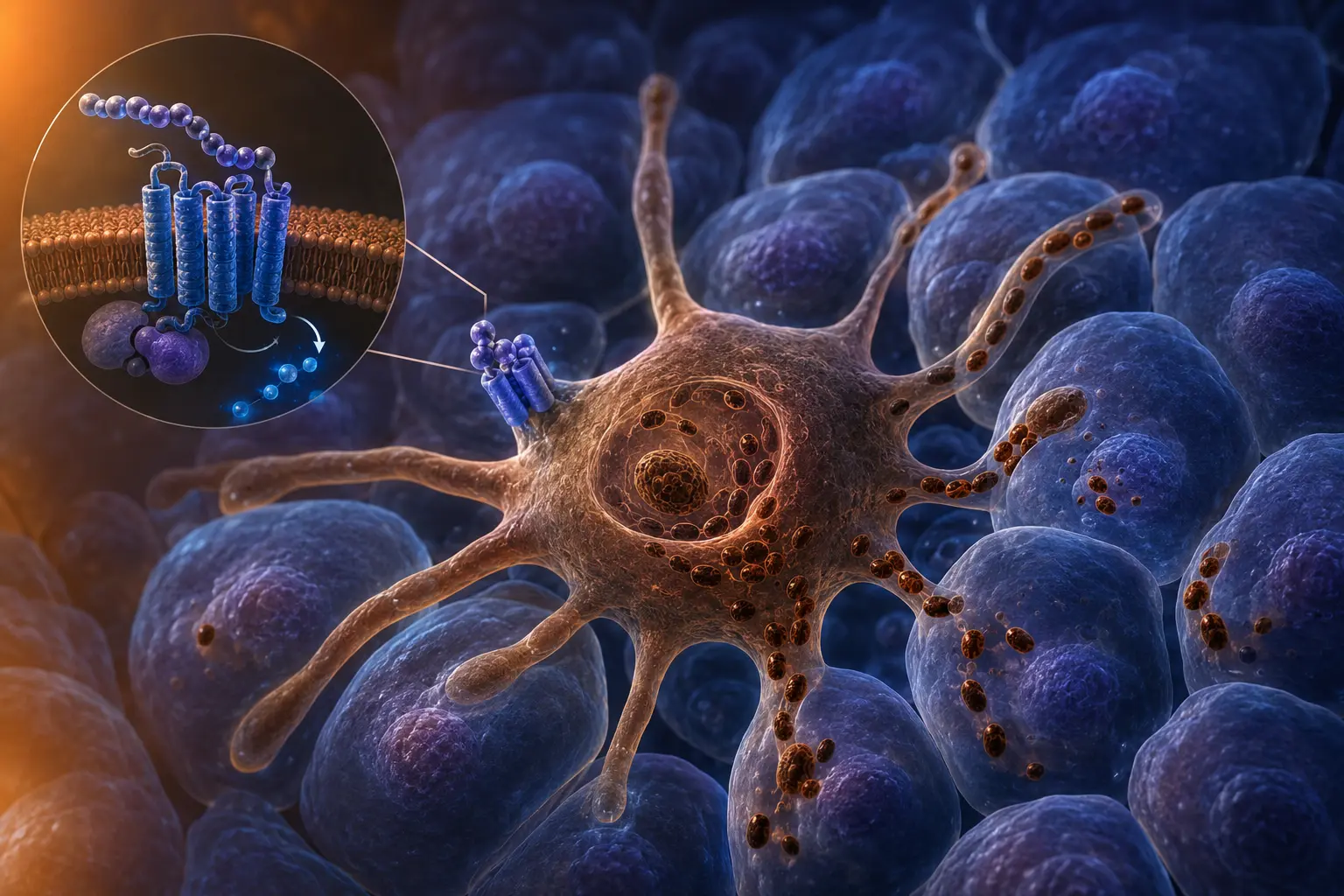
Melanotan II (MT-II) is a synthetic cyclic heptapeptide analog of alpha-melanocyte-stimulating hormone (α-MSH) developed at the University of Arizona by Victor Hruby, Mac Hadley, and colleagues beginning in the 1980s. It has been the subject of published research examining tanning responses and sexual effects, but it has also accumulated a significant case report literature documenting adverse events.
Melanotan II has never received regulatory approval as a pharmaceutical drug in any jurisdiction. It is not authorized for human use in the United States, European Union, United Kingdom, or Australia, and regulatory agencies in these countries have issued specific warnings against its use.
Presenting an honest picture of MT-II research requires discussing both the original research findings and the documented safety concerns with equal weight.
Origin and Structural Relationship to α-MSH
Alpha-MSH is a 13-amino-acid peptide derived from pro-opiomelanocortin (POMC). It activates all five melanocortin receptor subtypes (MC1R–MC5R) with varying affinities. Its short plasma half-life (~5–10 minutes) makes it impractical as a therapeutic agent.
The University of Arizona program sought to develop stable α-MSH analogs for potential use as tanning agents — the hypothesis being that enhanced melanogenesis might protect against UV-induced DNA damage and skin cancer. Melanotan I (afamelanotide) and Melanotan II emerged from this work.
MT-II's structure differs from α-MSH in several ways that enhance potency and stability: it is a cyclic heptapeptide (disulfide bridge provides cyclic rigidity), includes a D-Phe substitution, and has C-terminal amidation. The cyclic structure increased potency and extended half-life relative to linear analogs.
What Research Examined
Melanogenesis (MC1R): Early animal and human studies established that MT-II may stimulate melanin production in melanocytes, producing skin darkening. A small published clinical trial in fair-skinned men reported measurable increases in skin melanin index with repeated subcutaneous dosing. The tanning response was documented as real, though variable between individuals.
Sexual effects (MC4R): As with bremelanotide's origin story, male research participants administered MT-II in tanning studies unexpectedly reported erections. Subsequent studies specifically examined this effect. Small trials in men with erectile dysfunction and in animal models documented the phenomenon. This observation drove the development of bremelanotide (PT-141) as a more refined compound focused specifically on sexual function.
Appetite effects (MC4R, MC3R): Some studies examined MT-II's effects on food intake in animal models, consistent with MC4R's role in energy homeostasis. Nausea was also observed, which is mechanistically related to MC3R/MC4R activity in brain regions controlling emesis.
Documented Adverse Events
The case report literature on MT-II is substantial and documents several concerning adverse events:
Nausea and vomiting: Consistently reported in research studies, typically transient but sometimes severe. Mechanistically consistent with melanocortin receptor activity in brainstem vomiting centers.
Spontaneous erections: Persistent or unwanted erections have been reported in multiple case series.
Pigmented lesion changes: Multiple case reports have documented changes in existing moles (melanocytic nevi) — including increased size, pigmentation changes, or new lesions — following MT-II use.[][] While a causal relationship between MT-II use and malignant transformation cannot be established from case reports alone, the biological plausibility is significant: MC1R stimulation drives melanocyte proliferation, and activating this pathway in atypical melanocytes is theoretically concerning.
Cardiovascular effects: Blood pressure changes have been documented. The precursor to bremelanotide had to be reformulated due to blood pressure concerns identified in clinical trials.
Psychiatric effects: Yawning, fatigue, and mood changes have been reported in various studies and case reports.
Regulatory Warnings
- FDA (US): MT-II is not approved, is not legal to sell as a dietary supplement, and the FDA has issued import alerts for products containing it
- MHRA (UK): Has warned that MT-II "has never been licensed as a medicine in the UK and may cause serious side effects"
- TGA (Australia): Prohibited import and sale
- EMA (EU): Not authorized; member state agencies have issued warnings
Why MT-II Research Matters Despite These Concerns
Despite being an unapproved compound with documented safety concerns, MT-II occupies a significant place in peptide pharmacology history. It:
- Directly led to the development of bremelanotide (an approved drug)
- Provided important early data on the MC4R/sexual function relationship
- Demonstrated the feasibility of pharmacological tanning modulation
- Illustrates how research compounds can find unpredicted clinical applications
The lesson for researchers is not that all research on MC receptor agonists is invalid, but that the specific compound MT-II was not developed to the point of an adequate safety-efficacy characterization, was widely distributed outside of controlled research, and has produced an adverse event record that warrants the regulatory warnings it has received.
References
- 1.Evans-Brown M, Dawson RT, Chandler M, McVeigh J. “Use of melanotan I and II in the general population.” BMJ. 2009;338. doi:10.1136/bmj.b566 [PubMed]
- 2.Langan EA, Ramlogan D, Jamieson LA, Rhodes LE. “Change in moles linked to use of unlicensed 'sun tan jab'.” BMJ. 2009;338. doi:10.1136/bmj.b1raw [PubMed]
- 3.Hadley ME, Dorr RT. “Melanocortin peptide therapeutics: historical milestones, clinical studies and commercialization.” Peptides. 2006;27(4):921-930. doi:10.1016/j.peptides.2005.01.029 [PubMed]